Munjoy Hill
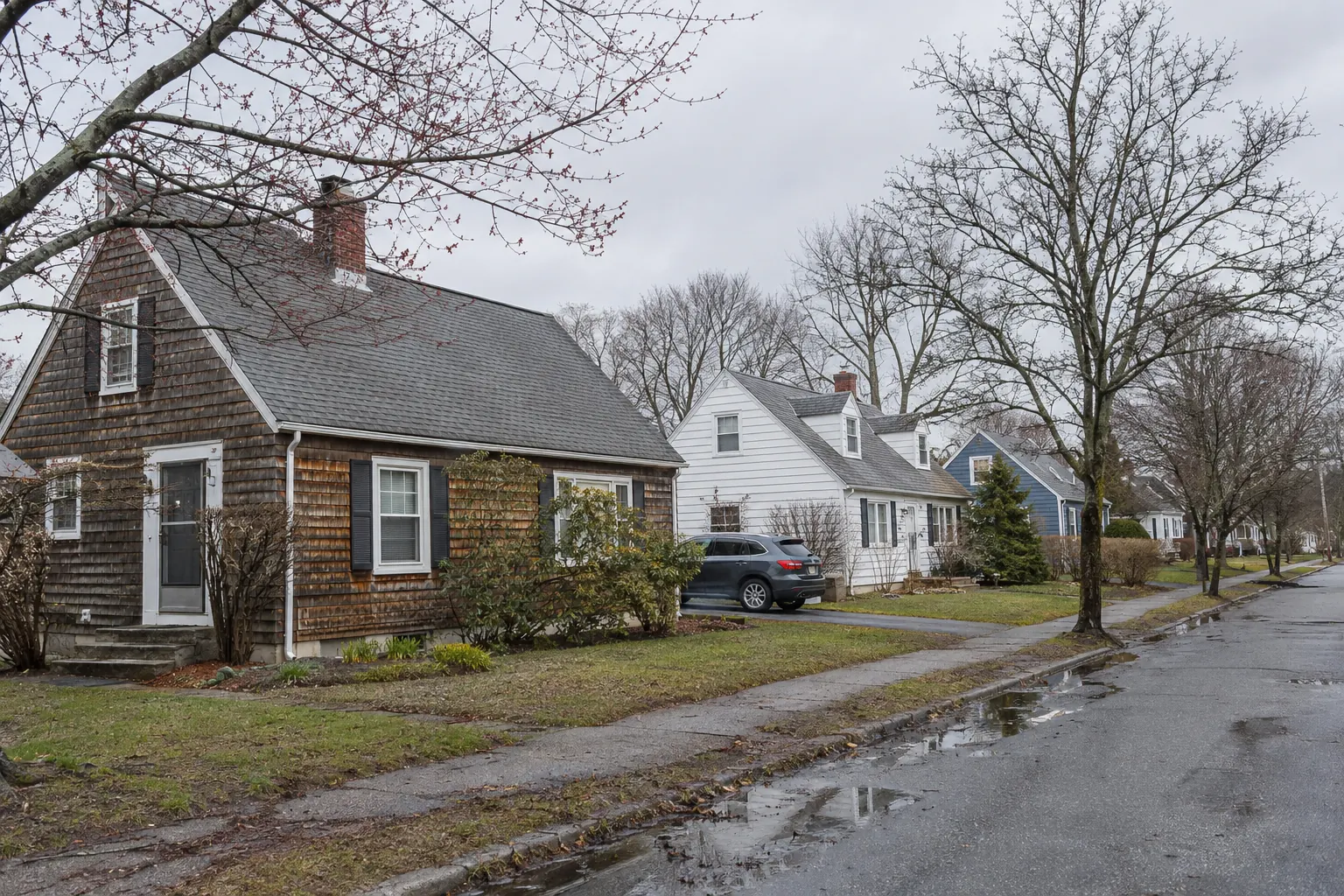
Tight basements, low ceilings and uphill neighbors. We plan around narrow access and shared walls.

43.66° N · 70.26° W · Cumberland County, Maine
Portland has some of the oldest basements in Maine: granite and brick foundations from the 1800s, sitting on clay that holds water. Our shop is about 15 minutes away in Scarborough, and these are the foundations we know best.
Much of the city was built before poured concrete was common.
Dense marine clay that drains slowly and keeps water against the walls.
Runoff on the hills; tide-level ground near Back Cove and Bayside.
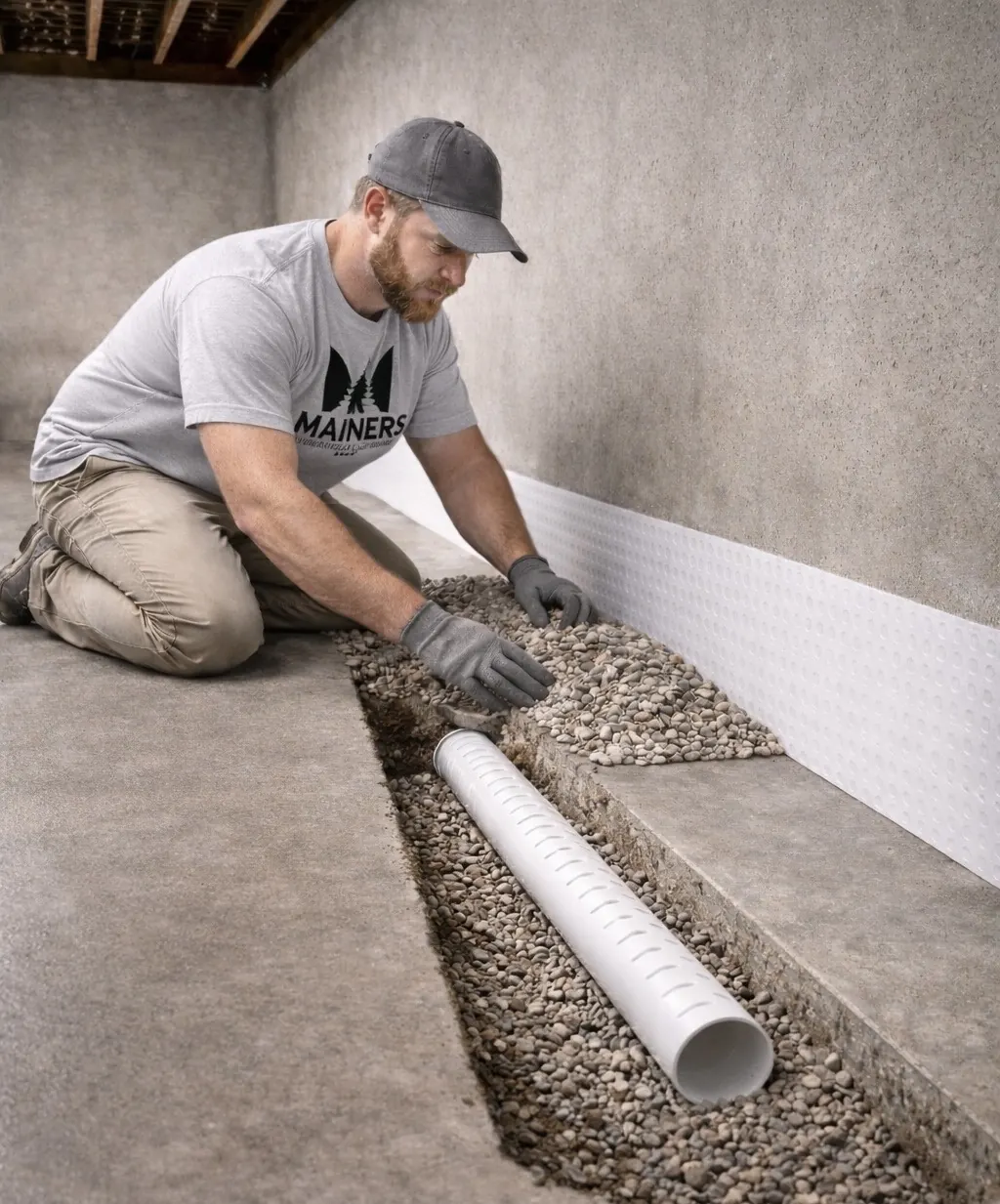
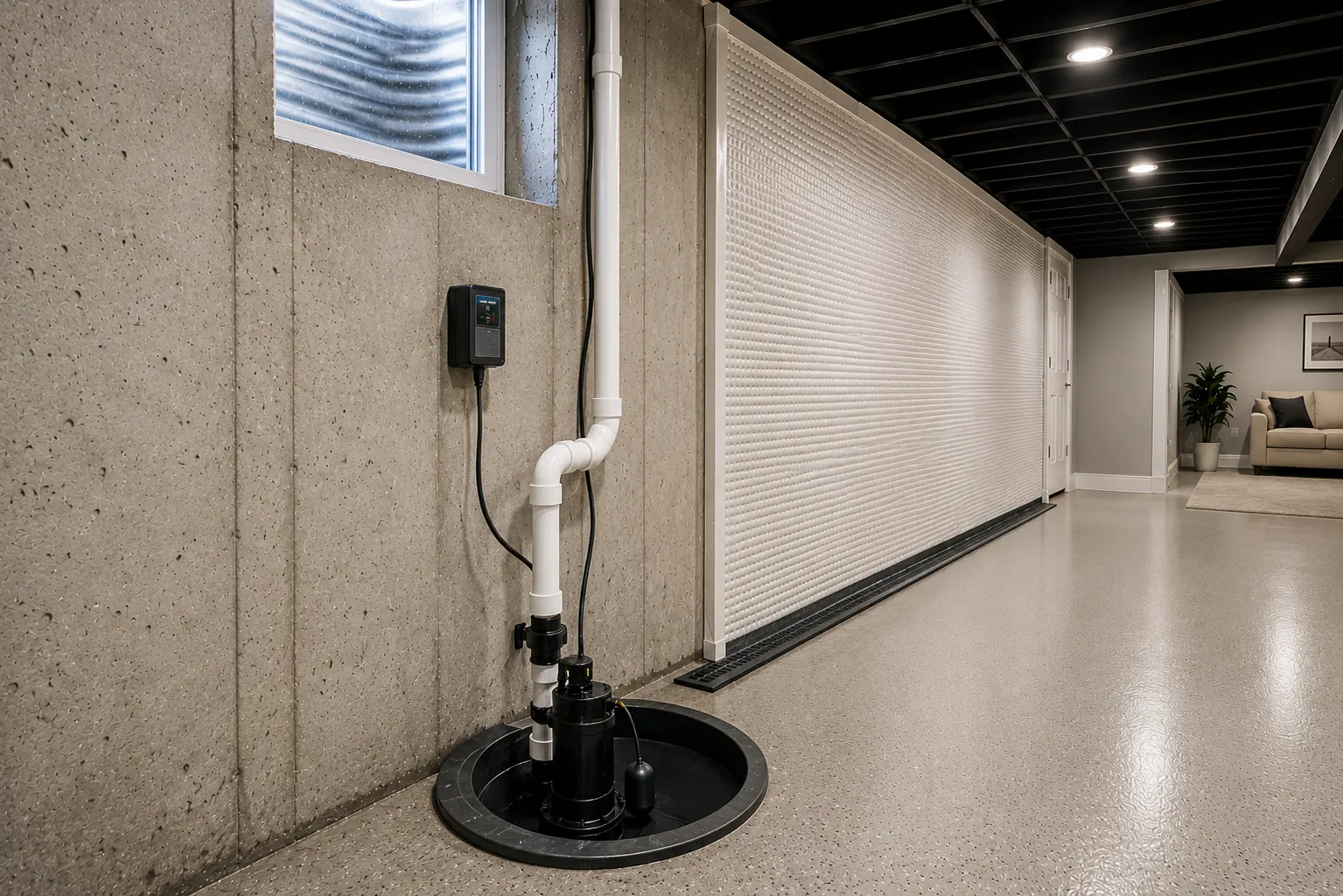
Pipe at the footing, carried to a sealed sump with a backup.
What we see in Portland
Most calls from Portland start the same way: water on the floor after a heavy rain or the spring thaw, a musty smell that won't go away, or a crumbling wall nobody wants to finish over. Here is what's usually behind it.
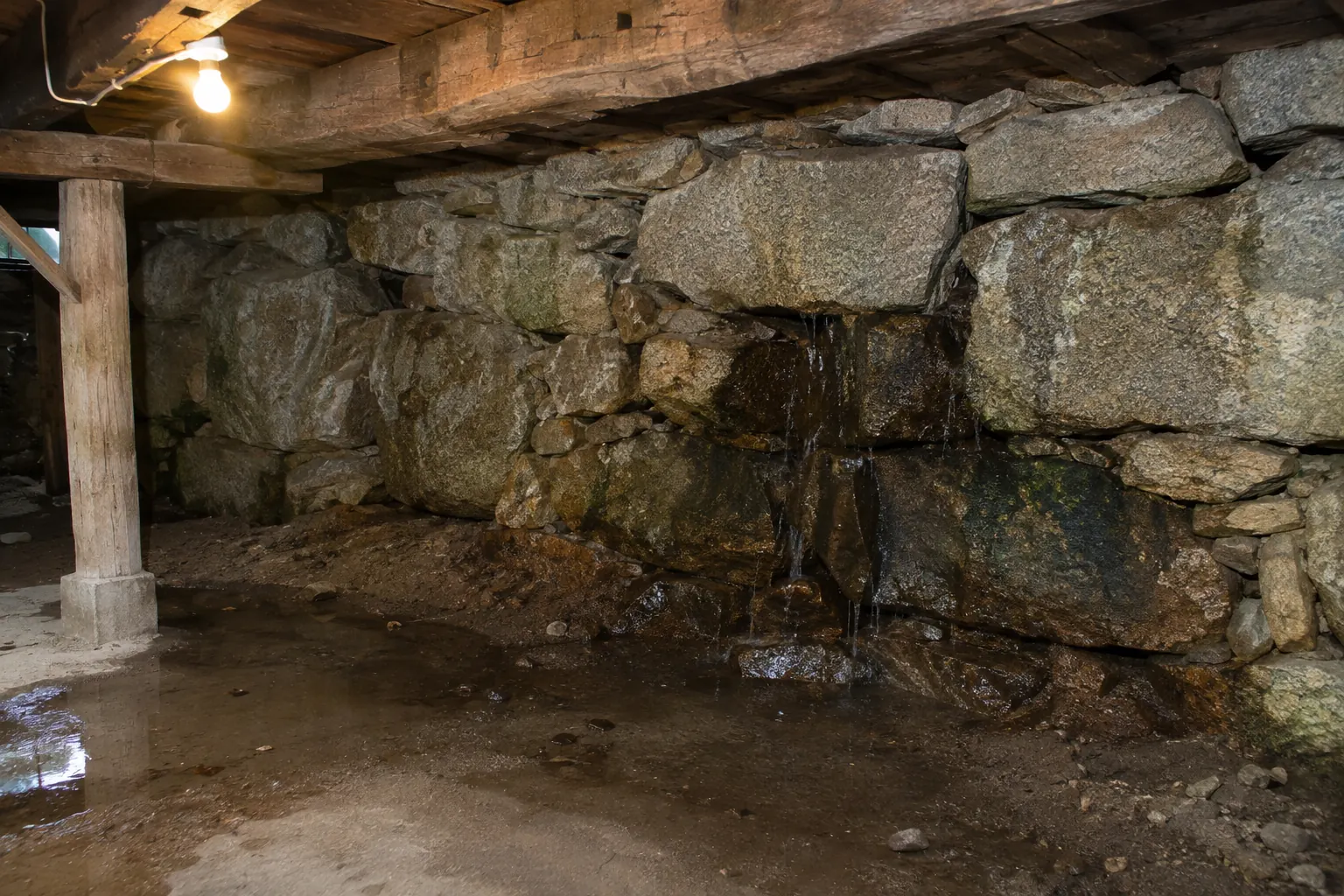
Rubble, granite and brick foundations were laid with lime mortar, and after a century much of it has washed out. Water finds every gap, especially where the wall meets the floor. Patching the face rarely holds. Catching the water at the base of the wall does.
Tell-tale sign: Sandy mortar on the floor and wet spots along the bottom of the wall after rain.Greater Portland sits on the Presumpscot Formation, a marine clay laid down when the ocean covered this area at the end of the last ice age. It drains slowly, so after a storm the soil around your house stays saturated for days and keeps pushing water in at the floor joint.
Tell-tale sign: Water seeping where the floor meets the wall a day or two after the rain stops.On Munjoy Hill, in the West End and across parts of Deering, the house uphill drains toward yours. Gutters and grading help, but on a steep street the water keeps coming, and a perimeter drain is often the only lasting answer.
Tell-tale sign: The uphill wall is always the wet one.Parts of Bayside and the edges of Back Cove sit on filled land not far above the tide, so groundwater is high to begin with. These basements need a sump that is sized right, with a battery backup for the storm that knocks the power out.
Tell-tale sign: Water coming up through cracks in the floor, not down the walls.Neighborhood notes
Portland basements change a lot from one neighborhood to the next. Here's what we keep in mind on the way in.
Tight basements, low ceilings and uphill neighbors. We plan around narrow access and shared walls.
Big old foundations with a lot of mortar joints. Interior drainage keeps the original stonework while getting the water out.
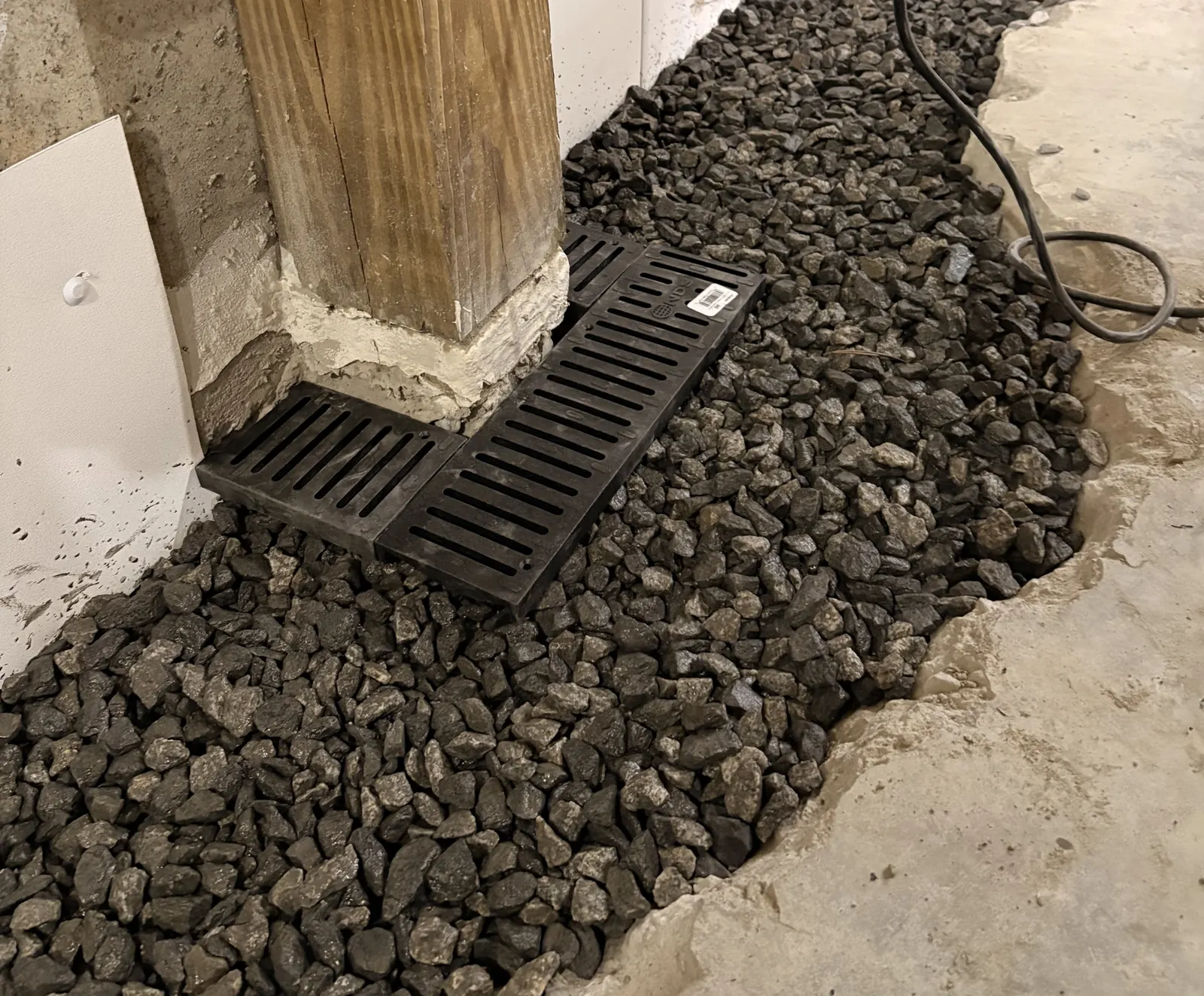
Block and poured walls with original footing drains, if there are any, that clogged long ago.
Water comes up as much as it comes in. Sump capacity and a battery backup matter most here.
Ledge, wind-driven rain and ferry logistics. Tell us you're on the island when you call and we'll plan around the boat.
Every house is different. Tell us what's happening in your basement and we'll come take a look.
The fix, matched to the house
We don't sell one system to every house. After the estimate you'll know where the water is coming from and which of these your basement actually needs.
Granite and brick walls get a drainage-based system, not a coat of sealer. We catch water at the base of the wall and leave the old stone in place.
See how it worksPerimeter drain pipe at the footing, set in stone and carried to the sump. The lasting answer for clay soil and hillside runoff.
See how it worksZoeller pumps, sealed lids and battery backups, especially for low neighborhoods where the outage and the water show up together.
See how it works
Why Portland homeowners call us
When you call Mainers Basement Company, you're talking to the people who will show up at your house. We're about 15 minutes up Route 1 from Portland.
Ben handles estimates and customer conversations himself.
Decades of experience with Maine and New Hampshire basements.
Backing on the systems we install.
Call or book an estimate any day of the week.
How it works
Call (207) 205-2250 or fill out the form below. We book estimates every day from 7 AM to 7 PM.
We walk the basement with you, find where the water is getting in, and explain your options in plain language.
Our crew installs the drainage, sump and backups, and walks you through the system when it's done.
Your system is covered by our limited lifetime warranty, and we're a phone call away if you ever need us.
Portland FAQ
Call and ask. If we can answer it over the phone, we will.
(207) 205-2250Yes. Narrow driveways, shared walls and low basement ceilings are normal on Munjoy Hill and in the West End. We plan the job around them, carry material in by hand when we have to, and keep the work area contained.
Yes. Old stone walls are common in Portland. We don't try to seal the face of the stone. We install an interior drainage system that collects water at the base of the wall and sends it to a sump, and we can add a wall membrane so water coming through the stone is directed down into the drain.
Yes. Portland is about 15 minutes from our shop in Scarborough. The in-home estimate is free, and Ben or one of the crew will walk the basement with you and explain what's going on.
Spring thaw is when Portland's clay is most saturated, so it's often the first sign. If water shows up every spring, it will keep showing up. We'll show you where it's getting in and give you options, including whether a smaller fix like grading or gutter extensions is worth trying first.
Yes. Peaks Island and Cliff Island are on our service list. Island jobs take more planning around the ferry, so mention it when you call.
More of our service area
 Cumberland CountySouth Portland, MEBasement waterproofing
 Cumberland CountyCape Elizabeth, MEBasement waterproofing
 York CountyKennebunk, MEBasement waterproofing
 Rockingham CountyPortsmouth, NHBasement waterproofing
Ben or one of the crew will come out, show you where the water is getting in, and give you a written estimate.
Tell us what is happening in your basement, garage, or foundation and a Mainers expert will follow up.